Thursday, 15 December 2011

London's Burning, London's Burning


Since it's been a while since I reviewed something I enjoy watching I thought I'd choose a series that I find to be unique amongst British TV drama and provides some fast paced action, a believable sense of danger and characters who the audience can care for: London's Burning.

I am a fan of television shows about the fire brigade and portraying the dangerous job that they have to do, cope with and survive on a daily basis. Yet despite the potential for complex characters, showing how they cope with such a hard and dangerous job and action scenes that leave you guessing who will survive there haven't been many TV shows about the fire brigade, possibly because of the expense involved in creating fire scenes which are believable and TV networks seem to be wary of trying new ideas for fear they might fail.
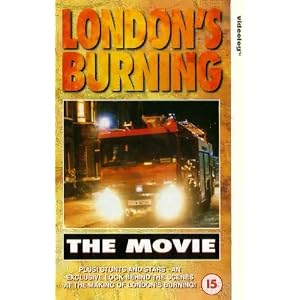
London's Burning started life as a TV movie written by veteran British television and film writer Jack Rosenthal and airing in 1986. Set in the East end of London the movie focused on blue watch at the fictional Blackwall fire station and their exploits on and off duty. The movie was a hybrid of drama and black comedy, showing the real world issues that people faced at work during the 1980s, including racism between co-workers who in this case regularly need to trust one another with their lives, women being introduced into a previously male dominated environment (yes this was an issue at the time) and tensions on a council estate between gang members and men in uniforms. Through the film there are several emergencies, not just fires but other complicated and sometimes more bizarre circumstances, showing what the fire brigade have to deal with outside of leaping through fire making it seem like it could happen at any fire station in Britain, this along with some witty and funny (if not slightly racist) banter from the firemen further strengthen the realistic feel. The movie makes no attempt to soften the drama and lighten things up from reality; police are seen searching innocent people continuously, the racist banter between the token black fireman and the ladies man has no boundaries and the firemen don't always save everyone they set out to rescue. All this makes the film gritty and makes you think about all the people who do this daily, we take them for granted without realising all that they do. At the end of the film all the tension that has been building up on the council estate through the film rises to breaking point triggering a riot that puts blue watch in danger and *SPOILER ALERT* Claims one of their men, letting the film end on a sombre note yet showing that life continues whether people die or not.

However with all the pros come some cons. While the movie is still a good watch today it hasn't aged well at all and still feels VERY 1980s, with the racist comments made by some of the firemen, the now cliche plot line about a woman gaining respect amongst a world of burly men, the clothes worn and the fire engines are all outdated in this day and age, however it is hard for films to stand the test of time if they are trying to be realistic as the conventions and tropes associated with realism change with the times. The film also suffers from pacing problems, when the riot kicks off at the end of the film there is very little foreshadowing of what eventually happens outside of a few conflicts between residents and the police, making it almost come out of left field.
Despite the previously mentioned flaws the movie was successful enough for ITV to commission a spin off television series. This expanded on the characters introduced in the movie and inserted a few new ones, showing that some time had gone past between the the series and the movie (the first series aired two years after the movie in 1988). The emergencies were also back, looking just as realistic and dangerous as they did in the movie, the realism was still present as the firemen still don't save everyone they try to and the witty banter between the crew on station wasn't compromised.

As the series went on firefighters departed to be replaced with new ones, the show changed from VERY 80s to VERY 90s (still hasn't aged well when viewed today), the fires got bigger and more exciting and the characters became more developed. The only aspect of the show that I find a bit hard to believe (aside from the odd Backdraft style stunt) is the number of firefighters who end up dying on duty, over 14 years SEVEN firefighters from this ONE station died, this coupled with the amount of events that happen at Blackwall such as; bombs being found under the road outside, being given a helicopter, being considered for closure TWICE and a suspected NUCLEAR LEAK stretches ones suspension of disbelief to a degree.

The major cracks began to show during the later series from Series 10 onwards, budget cuts meant fewer fires and more personalised stories, while Series 12 was more of a throwback to the older series and introduced some enjoyable characters Series 14 was the one that killed it. Fewer emergencies than ever, the once very well done pyrotechnics were replaced with hideous CGI fire, predictable soap style storylines, unlikable characters and a disregard for realism which had been a core element of the series from the beginning meant this series was the last. Since 2002 there have been no new episodes.

This is a shame because handled with care and thought this series or one like it could once again find an audience and sucess. We can only hope.

Skills presented, project still to do

Yesterday we presented our Audio Skills project and I have to admit I don't think it went as well as it could have, for one the sound effects in retrospective didn't sound close to what they were supposed to sound like and although they sounded okay in the edit when heard through headphones, when heard through speakers they don't always sound as good. While I think the sounds could work in a film that was intentionally bad I don't think it is convincing enough to be taken seriously as what we aspired to, perhaps our ambitions were set unrealistically high for what was achievable with the available resources.

But as stated before I do think that the Sense of Space project is stronger than the skills exercise as in my opinion it is a unique take on the idea of a sense of space and will hopefully stand out from the other projects (just hope no one has done the same as us).

I think the recordings to say they were recorded very quickly are high quality and the mixing fits with the "interviews" and it captures the almost docudrama feel we were going for. There are problems however; the gun sound effect doesn't really sound like one (although this could leave it open to audience interpretation of what the event was, like it could have been someone being hit by a car) and I also wish that we could have interviewed more "people", although it may have put a strain on the time limit.

Monday, 12 December 2011

Audio Projects Update 12/12/2011

The sense of space project has changed from a simple background recording of a pub into a more narrative based project. Based on my original idea I posted about a while ago about people's response to an event in the same style as the audio documentary "Child of Arolyne".

In deciding what the "event" was going to be my partner (Bex Bell) and myself went through the usual BIG shockers when it comes to disaster-like events such as bomb attacks, fires, shootings and even off planet events (aliens). Before we settled on something that wasn't going to be too hard to achieve but was close enough to home and shocking enough to work: A shooting in a residential area, loosely basing it on a recent local news story (A man was shot dead in Pitsmoor)

http://www.bbc.co.uk/news/uk-england-south-yorkshire-15511614

Splitting the recording of sounds we have compiled some "interviews" with "witnesses" to the shooting, the sounds of where they were and what they were doing at the time of the incident and how they reacted after it had happened, giving it a very faux-documentary feel and making it more interesting for the audience rather than just a random series of sound effects. I wish we had stuck with this idea from the start rather than going for the recently rejected idea as it would have given us more time to develop and refine it.

The other audio project (for Production Skills) I honestly don't feel is as strong as the Sense of Space. As I have to admit the recordings feel rushed and improvised at best and the atmosphere recordings aren't the best of quality, it doesn't help that whilst trying to edit we encountered exporting problems that don't render the applied effects (I'm sure we'll find a work around but it's just another frustration on the last leg).

One thing that I have learned from doing these projects is not to leave all the work to the last minute as it puts unecessary stress on those involved and makes the whole process less enjoyable.

Friday, 9 December 2011

Inspirations for Audio Project

Back when I was going to base my Sense of Space project on an off planet event one of my inspirations is the famous radio adaptation of 'War of the Worlds', during this controversial radio play which was considered so realistic at the time that many Americans actually believed they were under attack from martians there are several creative uses of sound effects to make an alien invasion sound convincing enough. The use of atmospheric sounds alongside the sound effects put in the context of a news broadcast create a feeling of realism that makes everything so much more believeable.

http://www.youtube.com/watch?v=egudvdwtDIg

Tuesday, 6 December 2011

Project Overhaul

Well, the Sense of Space project has had a HUGE change in the space of a couple of hours. Whilst trying to go with the idea of basing the recordings on a pub setting problems arose the second we stepped into the Student Union, although we tried to get some ambient sounds of a general pub location we encountered one fatal flaw: There was Lady GaGa music playing loudly in the background of everything we tried to record. For obvious reasons we can't uses this, after realising that every pub would have some sort of music playing we decided to scrap the idea.

Instead we have gone back to my original idea for the project: Having people's reaction to an event, after a quick discussion with Debbie we quickly planned the piece's structure and devised a script. We set out who would be recording what and now we're ready to get started (we won't be changing our idea again, hopefully)

Monday, 5 December 2011

Sense of Space: Update 4th December

Since I've had a recent meeting with Dom there will be some changes in how the project will end up.

Although we are sticking with our idea of setting the piece in a pub. But rather than having just the ambient noises for three minutes we have decided to add a narrative to it, still heard through the background and not in complete focus but still audible enough to register with the audience, this may only be a brief bit towards the end of the piece and may just involve someone entering the pub and in Clint Eastwood style, everyone goes quiet as the man walks up to the bar and gets a drink. This may be more developed in the final piece.

During the pub scenes we will also be adding people talking in the background; we will go into real pubs and ask certain people a couple of questions and put the most interesting answers into the piece as if you were evesdropping on someone else's conversation whilst sipping your pint.

We hope this will imply a sense of space without it feeling too narrative driven or documentary-esc.

Friday, 2 December 2011

Audio Exercise ideas sheet


Okay, so with another audio project on the horizon I've decided to make an ideas sheet for what the 'imaginary film's' plotline will consist of and some ideas for what sound effects we can try to make and where they belong in the film. I've yet to show this to my partner for this project, so again this may all change. This is actually an adaptation of the original idea I had for my Sense of Space project that we've got coming up, since I thought while the idea didn't fit the brief it did have potential and could be used elsewhere.

Monday, 28 November 2011

Red Dwarf. My thoughts.


As I've stated before I love science fiction and the numerous possibilities it offers for adventure. That being said I've never really been an avid follower of any science fiction franchise, I'm definitely not a Trekkie and although I do watch Doctor Who and am a fan of Star Wars I've never been too attached to them.

Red Dwarf however is the exception, I LOVE this show.

The setup of Red Dwarf is a basic Sci Fi story: the lowest ranking crew member of the mining ship 'Red Dwarf' named 'Dave Lister' is put into suspended animation as punishment for smuggling his pet cat on board. During this time there is a radiation leak and the entire crew of the ship is wiped out, the on board computer 'Holly' has had to keep Lister frozen until the radiation dies down to a safe level. Three million years later Lister emerges to find himself alone in deep space with only Holly, a life form who evolved from his cat and a hologram of his dead roommate (Rimmer) for company, their mission: Get back to Earth.

What makes this show work so well is the characters and the cast who play them. Dave Lister played by Craig Charles is NOT a typical handsome space hero like what you see in Star Trek and Star Wars, he's a low life, slobby, curry eating, beer drinking grease monkey. This is a nice change of pace and it's a very amusing possibility to think that potentially the last human being in existence is a lazy and uninspiring slob who lives off vindaloo and not a remarkable scientist or space adventurer.
But Lister wouldn't be as funny as he is without his opposite, the second part of the main Red Dwarf duo: Arnold Rimmer played by Chris Barrie is what makes this show what it is, he's the complete opposite of Lister, high class and brought up by a military family, aspiring to be something more than a chicken soup machine repairman, he wants to be an officer. The only problem is he's a completely idiotic, self obsessed, dis likable, stupid , slimy, deceiving coward. These characteristics are perfect as he and Lister constantly play off each other to great comedic affect.

There is also a great supporting cast who provide comic relief aside from the odd couple relationship of Lister and Rimmer. There's Cat played by Danny John Jules, who evolved over millions of years from Lister's pet cat, he's completely self obsessed and only concerned about his image, dressing in outrageous coats and suits he's the coolest character on ship. In the earlier series he displayed many cat like qualities and even look to Lister as his God (this was downplayed in later series).
Kryten played by Robert Llewellyn is an android who obeys every command no matter how stupid, over the course of the series Lister teaches him how to break his programming and become more human like, this gave him some amusing character quirks.
And finally Holly played by Norman Lovett and Hattie Hayridge, Red Dwarf's once intelligent computer who's now gone slightly senile.

What's brilliant about this series is that every character has a purpose and deliver some very witty and funny lines en keeping with the situation they're in, and boy do they find themselves in some bizarre situations! Backwards realities, alternate dimensions, shape shifting creatures, psychotic killer viruses and a visit to the wild west just to name a few. Yet despite the weirdness of the group's adventures they all seem scientifically possible and despite the show being a comedy the science fiction is often believable and you care about how the characters are going to solve the crisis of the week and escape with their lives (if not their dignity). The believable science fiction is backed up special effects that are very good to say they're for a BBC sitcom with no budget made in the late eighties and early nineties. Another remarkable thing about Red Dwarf is how much of a fan base it's attracted, whilst it was consistently popular in the ratings on BBC Two with the general public it attracted a cult of Sci Fi fans who were entranced by the concepts and the high production values, the show has a worldwide fandom similar to that of Star Trek and even has it's own popular vocabulary with words like 'Goit', 'Gimboid',
'Gelf' and 'Smeghead' recognisable by people all over the world.


*SPOILERS ALERT*


However despite how much I've praised Red Dwarf it does have it's weak points: There are times when continuity is thrown out of the window and some episodes feel lacking overall. The writing out of Rimmer in Series 7 to be replaced by Lister's old girlfriend Kochanski was a big mistake considering how Rimmer and Lister's relationship is what made the show so enjoyable, the reconstruction of the Red Dwarf crew in Series 8 and the crew being prisoners on the ship seemed to come out of left field and not make much sense from a plot perspective, speaking of Series 7 & 8 the very well done model effects were replaced with less than convincing CGI. There was also three special episodes produced in 2009 'Back to Earth' which received a mixed reception from fans and critics, I personally thought they weren't on par with the older series but weren't terrible either.

Red Dwarf will always be one of my favorite science fiction series and with the promise of a new series with the original cast set to air in 2012 I hope this series will continue the exciting, enthralling and hillarious tradition of Red Dwarf.
In the meantime...
"Smoke me a Kipper, I'll be back for breakfast."

Sense of Space: Update

Plans have changed concerning the Sense of Space project: The original idea which I had has not so much been ditched but put on the back burner (I may use it for another audio project I have lined up). Since I have had a meeting with my partner for this project we have decided to go for a more brief fitting idea; to properly convey sounds that are heard in a particular space (which my initial idea didn't fit). We considered trying to illustrate the metaphorical space in someones head which could be made up of the thoughts that a person has had or experiences they've undergone throughout the day, the only problem is that it would have been very disjointed if it wasn't executed properly.

Another idea we came up with while listening to the empty corridors of the university we wondered what a place would sound like after it had closed down for the night, with just the air conditioning to listen to.

However we've since opted to do the sounds of a pub, as there are a lot of sounds that can be heard in this particular area, such as people talking, drinks being poured, music playing, slot machines etc. We're still planning how this will be executed but I believe we will be able to pull it off.

Monday, 21 November 2011

Sense of Space: Mind map


Here is a mind map containing my initial ideas for this project. I decided to portray an event occuring in a place. The event would not just be an everyday one but would conjure up a reaction from people who witness it. I could interview people discussing their reactions to real events and then incorperating these interviews into the piece.

(Please note these ideas are subject to change as I am yet to find a partner for this project)

Audio Project: Sense of Space

Okay, so we've received a new project recently, an audio project entitled: Sense of Space. This is completely the opposite of our last project which was all visual based.

To get the creative 'juices' flowing we were given several audio tracks to listen to:

The Curious Ear - Meat Factory Ear Worms by Richie Bierne. A strange piece describing how a man gets through his mundane and often gruesome job by singing along to music was quite off putting with its use of sound effects, monologue and it's juxtaposition of gentle music with the sounds of animals being slaughtered made it seem quite disturbing at times.

Child of Arolyne - a more serious documentary piece documenting life in an Irish town during the recent troubles. It was hard hitting with the voices of locals over cut with the background tracks of the city and the panic that occurred when the people got shot by the IRA.

Blue Veils and Golden Suns - These tracks by BBC artist Delia Derbyshire sound as if they were supposed to match to some sort of visual aid, such as a film scene or a painting which sounds quite strange when listened to by itself.

The Sound of Sport - A much more straight to the point and easy listening documentary about a sport's commentator's career from working in a recording studio to working for ESPN.

Tunnel Visions - This is a really strange and sometimes disturbing piece concerning the more unseen nature of users of the tube and how it and the people on it provoke sexual desires towards fellow commuters.

Sonicpostcards.org - A selection of clips from a website that allows users to record audio from their current location and upload it instead of sending a text based postcard. Quite innovative.

So far I have a couple of ideas that could be utilised in interesting ways into this brief. I'll go into them in more detail later.

Tuesday, 15 November 2011

Camera Edit Exercise 1

Recently I have finished a pairs project in which we had to demonstrate our skills in camera operation and cinematography. Editing has been completed going through the three stages (Assembly, a rough arrangement of the sequence. Rough cut, an approximation of the final project and Fine cut, often the final edit.

We just need to burn it to DVDs (for a second time, as we seem to be having compatibility problems with PCs and MACs DVD players and burning, or something along those lines)


Thursday, 10 November 2011

Video Editing Exercise


This is a short video made in an editing workshop. We were given pre-recorded footage of martial arts and were told to edit it into an action scene. Rather than going for a quick and confusing action sequence that is commonly seen in modern day blockbusters my partner and myself opted for a slower and more drawn out scene, reminiscent of the old wild west movies. In addition to the twenty second time limit we had to add at least one shot which incorporated a split screen, ours replicates the kind of shot commonly used in anime; two opponents face each other before making their advance to the fight.

Overall I'm pleased that the video looks this good given the short amount of time and the criteria we had to work by.

Portait of Place: Complete


Finally the Portrait of Place project is completed and ready for submission tomorrow. Whilst I think the project has it's flaws it definately could have been a lot worse, I just hope that I did everything right in the technical department (I'm not too confident about that).

Wednesday, 9 November 2011

Portait of Place: Editing

Well my partner and myself are well into the editing stage of the project. So far we've made a rough cut, which we showed our tutor who gave us some feedback on how to make the film feel more polished and professional, whilst staying within the time limit we have of 3 minutes. We've edited the flashback sequences so they transit with the rest of the film as seamlessly as possible. We've also colour corrected some of the footage where the white balance was off so the whole film looks more visually consistent.

The only drawbacks we've had (aside from the odd creative thinking disagreement) is how we've saved the footage, we've saved it (foolishly) on a single mac and the footage won't copy over to another storage device (too big??) so we need to get the film finished as quickly as possible so that it doesn't get wiped :0. The other hindrance on our progress is our unfamiliarity of Final Cut, I'm personally more fond of Sony Vegas and I used Adobe Premiere and After Effects for the majority of last year's course.

However, I'm confident we'll get the film finished in good time and that it will look reasonably professional.

Tuesday, 1 November 2011

'The Cops' (Possibly the most "realistic" police drama ever)

I'm a fan of police procedural dramas, especially when they focus on the regular guys on the front line over the more popular and glamorised detectives who seem to steal all the thunder for solving crimes.

'The Cops' is one of those series that only comes along every once in a while that makes everything else in its genre look tame by comparison.
The show centres on a shift of police officers working in the fictional town of Stanton (even though it's obviously supposed to be Manchester) and the grittier side of front line policing. Even though this series is semantically a police drama, syntactically it's anything but. The officers aren't portrayed as glamorous heroes who seek glory and justice, instead they're just regular guys who are trying to keep their heads above water in their Shameless-esc dump of a town.


Probably the most noticeable part of this series is the camerawork, it's all shot handheld almost like a police documentary making the audience feel as if they're there, following the cops around on their duties. The sound also appears to be all diagetic (although a lot of this would have been added in post production) and there's no music at all (not even a theme tune). These cinematic elements make the series seem hyper-realistic, in fact it was too realistic for the real police force who cut off all association after the first series, a lot of this was due to it's depictions of parts of the police that the chiefs of forces would rather the public didn't see, none of the cops are perfect, they're all flawed and they all have something to answer for.


It's this level of grittiness that sets this show apart from other programmes of this genre like 'The Bill' and 'HolbyBlue'. I find this show extremely underrated (although it won two BAFTAs it has never been released on DVD for reasons unknown, although most of the first series is available on YouTube).
Overall 'The Cops' is a breath of fresh air from the soap style drama 'virus' that has struck many other British dramas, its realism combined with its interesting take on an old idea makes this a series that has to be seen.

Portrait of Place: Shooting Report.

We recently went to Edale to film out Portrait of Place projects. We had an actress (which required improvisation as the part was originally written for a male). As we arrived by train the scene looked rather bleak: rain was falling, a fog was lingering over the hills and everyone was feeling a little glum. Whilst on the shoot we encountered several problems, some that are common in film production and others that were unique to our location.

The first problem was the aforementioned weather, while the rain wasn't constant it still could have damaged the equipment, so we had to cover the camera with a plastic bag and make sure it didn't get into shots. We also had the problem of distance between the locations we were supposed to shoot in as it took more time than anticipated getting from one location to the next, we also had the problem of multiple groups wanting to use the same location at one time which caused some compromises to be made in what was shot when (this wouldn't have been a problem if we could choose WHERE we filmed rather than being shipped off to one location, but that's just my opinion). We also had problems with locals sometimes getting in the way of shots and not realising what we were doing as well as obstructions that we hadn't anticipated, such as vehicles or trees being in a slightly different location that was seen on Google Earth. Fading light was also a problem and is noticable in some of the scenes.

But with that being said we still got all the footage needed to complete the film.

Wednesday, 26 October 2011

(VERY ROUGH) Storyboards: Portrait of Place


These are the storyboards made as a guide to how the Portrait of a Place project will be filmed (shots may slightly alternate between this and the final film.

(Sorry the drawings are so ameateur and messy, hopefully the final film will look a bit better)

Tuesday, 25 October 2011

Portrait of Place: Script

Continuing from the last post I made on this project; my partner and I had the idea of a man stumbling round the village of Edale in a confused state. When it came to writing the script we decided that we needed something with a little more depth and meaning than what we currently had.

After some writing and discussion we decided to add a plot line involving a man who had got drunk, stumbled through the village and collapsed in the middle of a field (this would be shown through flashbacks played throughout the film) and after the man wakes up he retraces his steps to the pub in which he got drunk in the first place.


Scene 1: The field in which the man wakes up in before continuing his journey and the forest the man walks through.


Scene 2: The outskirts of the village, the man continues his walk.


Scene 3: The Village centre where the man has flashbacks involving the pub and a phone box.


Scene 4: The church that the man passes on his journey.


Scene 5: A row of houses and a grit bin, in which the man remembers doing something rather embarrassing.


Scene 6: The pub from which the drunken walk began.


Here's the script (slightly editted from printed version):

Monday, 24 October 2011

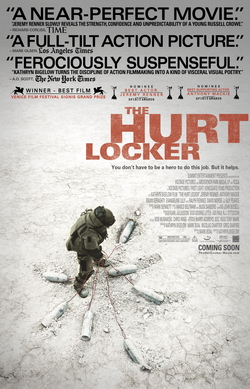
The Hurt Locker: Thoughts


I've been meaning to write this post for a while now but haven't got round to it, so now here it is:

The Hurt Locker is a modern war film set in Iraq and focusing on a bomb disposal team, the film gained most of its fame by beating 'Avatar' to win the Oscar Best Picture at the Academy Awards in 2010.

After going into this film not knowing what to expect (I hadn't read any synopses about the film or heard any spoilers) I was pleasantly surprised by the film's characters and storyline. Rather than focusing on one of the most commonly used war film plots (the rescue mission) and having flat one dimensional marines the plot just seemed to focus on the various events that happened during the squad's tour of duty, with a time limit occasionally appearing on the screen displaying how many days they had left, this made you want the soldiers to get out alive but also made you weary that just before they were due to leave someone would die, thankfully they didn't resort to that tired cliché (completely).

The soldier's themselves had a lot more depth than is commonly seen in war movies and a lot of the movie is spent with the soldiers as they exchange banter and discuss what life's like back home. At a time where soldiers are still being killed in Afghanistan it makes you realise that all the faces you see on the news that might seem like statistics at the time are all real people with friends and family who will miss them. The soldiers are frequently seen talking about their families and one soldier says he wanted to have kids at some point but now thinks it's too late. This somewhat defies the old notion that the army is the last resort for people with nothing and nowhere else to go. Even the main character, who is depicted as slightly different from everyone else (he defuses bombs with sometimes absurd methods, including taking off his bomb suit or acting entirely on instinct) is shown as a very human character, he has a wife and even a child back home.

As I have little knowledge of the American military or the conditions of the war in Iraq the film felt real enough for the audience to believe what is going on and the human cost of the war is very well sometimes graphically depicted; children who the soldiers have interacted with are shown dead on several occasions, the bomb squad aren't always successful in what they do, several times they fail to disarm bombs and people do die as a result. In one particular scene the soldiers arrive in the aftermath of an explosion and one of them just surveys the scene for a moment in disbelief, he was there a few minutes previously and everything seemed normal, now it is anything but. Perhaps this also illustrates that no matter how many times they see this it doesn't get any easier to cope with. Other times they would be caught in the crossfire and not always hit their targets with one shot (like a lot of action movies) and basic things like a fly can break their concentration.

The explosions, what few of them were in the film were also handled with a degree of realism, the explosions are shown as very powerful and not the fireballs a hero can just walk away from as seen in a lot of Hollywood films, at the beginning a soldier is killed by being thrown away from the explosion and breaking his head open on the bomb suit that was supposed to protect him. When an explosion goes off the ground erupts around the bomb, making it literally earth shattering.

I could go on about how good this film is but when all said and done it's a refreshing, reasonably realistic and interesting war film that's definitely worth watching.

Saturday, 22 October 2011

Portrait of Place: Ideas.

We were assigned our first practical project this week, the task: The make a silent film that we would go to Edale to film.
This is the sheet of paper that me and my partner used to brainstorm and select ideas, after coming up with several we chose the one we were going to film: A short slapstick 1920's style film in which a man would wander round the village in a bemused state wondering where he is.

(We would go on to alter this idea in the script writing process)

Whilst brainstorming we looked on Google Maps Street View to aid our creative thinking and to see what was in Edale that could be used in the film in terms of buildings or other locations.

Some of the other ideas that we conceived included: a documentary style film showing a man's day around the village, the documentation of a man waiting for his train that never comes and even the possiblity of a surrealist film was suggested.

Wednesday, 19 October 2011

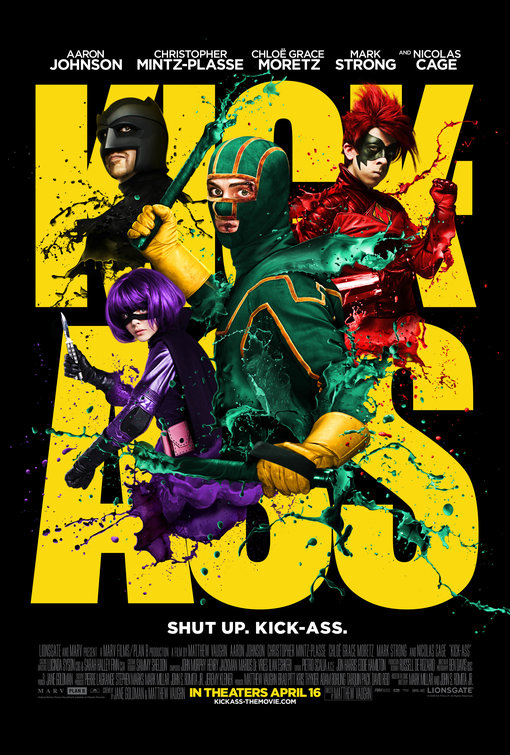
Thoughts on Film: Kick Ass


Media involving superheros has always been popular; from the Superman comics of the 1940s to Christopher Nolan's compelling and deep 'The Dark Knight' the costumed hero has always captured the imagination of audiences and had their creators reeling in the cash.

One particular medium that's become increasingly popular in recent years is the superhero blockbuster, with almost every A list and now B list comic book hero receiving their own cinematic adaptation.

Kick Ass, like many other superhero flicks is an adaptation of a comic book of the same name; following a nerd who through his own choice decides to don a colourful outfit and fight crime as a superhero.

This film, like the comic attempts to satirise the superhero concept whilst still adding it's own creative twist, rather than shying away from superhero cliches like so many modern blockbusters or deconstruct the characters like in 'Watchmen' it makes fun of them for what they are, but towards the end of the film it seems to lovingly embrace them, and it turns into an overly produced superhero action flick, similar to how 'Hot Fuzz' took the police action film, mocked and shy-ed away from the cliches before turning into one of the film's it was paying homage to.

The characters themselves were interesting and sometimes amusing send ups of classic superhero archetypes; the main hero for instance is a nerdy loner but rather than him be inspired by a family member's murder or a forced situation (e.g being bitten by a radioactive spider) he chooses to become a superhero on his own accord simply because to his knowledge no one has done it before (he soon finds out why), this was an interesting alternative to the origin stories associated with many superheroes as it's nothing out of the ordinary everyday person wanting to try something different, he's the ultimate 'elevated fan boy'.

The other characters followed suit with their almost lampooning of superhero caricatures, such as the rich man with all the gadgets, obviously inspired by Batman and the film makes no attempt to hide this fact, the character is referred to as 'The guy who looks like Batman' on several occasions, however his morals are the complete opposite of the said hero as he repeatedly goes round shooting people and revelling in the violence and chaos he causes. The same can be said of the child hero, where as most child turned superheroes would have trouble adjusting to their new responsibilities and powers this girl was raised to be a combat trained hero, so she knows nothing different, she is also a complete psychopath and very un-childlike, constantly killing and wounding her enemies as well as swearing.

This along with all the gory and graphic violence in the film made it seem mean spirited and unnecessarily cruel and some of the violence felt as if it were unnecessary. Although the violence does make the film feel reminiscent of 'Kill Bill' with the characters using lots of weapons and complicated martial arts stunts, to me this is what Tarantino would do if he directed a superhero movie.

The film also contains a lot of pop culture references and use of modern technologies such as YouTube and Facebook. It felt like it was trying to appeal to the 'digital generation' a generation who commonly use the Internet and are aware of viral media.

Overall I enjoyed this movie, as I am a fan of the superhero genre and I liked that it was trying to do it's own thing rather than apply to the generic conventions of what is expected of this kind of movie and the homage elements were welcomed. However I did feel the violence was unnecessarily excessive and the attempt to appeal to the young and 'hip' crowd could make it seem dated in the coming years.

Tuesday, 18 October 2011

Salaryman 6


This short by James Knight was an interesting and sometimes thought provoking film, it centres on a man who has lost his memory of the previous day, so it doesn't happen again he carries a camera which takes pictures of what he does, after a few days he gets the photos together and realises that his life is just a continuous loop and at the end of the film the cycle begins again.

The cinematography played to the film's subject matter; the camera is usually stood still without much movement, observing the events. The camera angles are almost always wide angle, showing how small and insignificant the character is in this massive, sometimes seemingly endless world, with apartment complexes, office blocks, tube trains and corridors seeming to stretch on almost infinitely. Continuing the theme of a continuous loop the same shots and sequences are repeated, giving the sense that his life is so repetitive that he can't remember one day from the next.

The mise-en-scene was fitting to the repetitive theme; as the same objects are used (if there's a chair, there is only one design of chair, the shops are full of the same things with no variety, the buildings are big menacing and lifeless, the character's room is very unpersonal with no pictures or personalisations to differentiate him from anyone else. It reminds me of the office scenes in 'Fight Club' where everyone is doing the same thing and everything seems to be the same "everything's a copy, of a copy, of a copy."

I think this film is an interesting look at how people's lives can end up going and is a common concern of a lot of people, that their lives will become so mundane that they become just another cog in the machine of society.

Gasman


Lynn Ramsey's 'Gasman' is another film of the social realist genre (reality based drama, events which could happen in the real world).
Set at Christmas time the film depicts a father taking his children out, meeting another woman and taking her kids as well as his own to a Christmas party in a social club.
All the way through the film feels really cold and icy, the winter air (making the character's breath show), the character's attire combined with the cloudy sky and the lack of greenery in the vegetation the characters walk past make the viewer feel chilly, the atmosphere between the father and his kids only enforces that cold feel as it doesn't feel loving or warm like a father child relationship should be. When the second set of children join the group that doesn't improve the situation as one of the first children makes degrading comments on how the newcomers look.

When the group reach the Christmas party the atmosphere doesn't improve a great deal, and why there are tensions becomes clear when the two little girls get into a fight with each other over who's 'daddy' the father is. While some may have got the reference when the father and the woman conversed but this scene cements it: he's the father of both lots of children, just from different relationships with different women and the children didn't know this. This is why I think the film belongs in the social realism genre; this could have and probably does happen in real life, men leave women with kids and try to start a fresh with another relationship, it's when the paths cross that trouble can arise.

The whole film, along with the cold and chilly atmosphere has a very impersonal feel to it, we rarely get close ups of character's faces and in the opening sequence in particular we don't see a single face and the mother is kept in the shadows as if she doesn't matter. At the Christmas party which should be a place of happiness and celebration, aside from a few seldom smiles the overall mood is still gloomy amongst the girls, who look out of place with all the other children playing around them, the juxtoposition of the Christmas music is clever as well, showing the girls should be happy but they aren't.

I enjoyed the film in part because of it's cold atmosphere and because it kept me interested in what was happening.

High Rise

HIGHRISE from Gabrielle Russell on Vimeo.


Gabrielle Russell's short yet powerful film, possibly based in the social realism genre. The film begins with a panning/zoom shot over a British housing estate featuring a lot of high rise blocks of flats, immediately the audience can assume that the setting of this film will be in a working class area of town simply from the buildings surrounding it. In one of these high rise flats there is a mother watching the television while her baby is playing with a toy. The flat itself is reminiscent of the TV show 'Shameless' in that it is frankly disgusting; the wallpaper is peeling off and mouldy, the floor is unclean and covered in bits and the sofa is sagging and dirty. The mother herself looks unhappy, wearing scrawny clothes and curled up in a chair like she's trying to hide from something. When the baby starts making noises the mother just looks at it with a very blank emotionless face, no traces of love, affection, kindness or anything one would associate with a mother and baby relationship, perhaps implementing that this baby wasn't 'wanted' or that she regrets having it.
During the film the baby's toy hangs off the edge of the window, with the multistory drop beneath, at first the mother attempts to get the baby, but falls dropping a bottle on the floor, then she hesitates, making the audience wonder whether she's going to get the baby in time. In the end she slowly backs out of the room, she seems to be looking for a reason to get rid of the baby and this is one. After she stands in her dimly lit hallway she hears a scream and rushes back in, much of the audience are probably thinking that the baby fell, especially after we see the open window.
Ultimately the baby didn't fall and just the doll did and the scream was just on the TV. As the mother looks down the doll is smashed on the pavement, it's arm fallen off, showing what could have happened to the baby.
All through the film a gameshow has been playing on the TV and whilst to some it may seem irrelevant I saw the intentions behind it: When the doll is hanging on the window the quizmaster announces the final jackpot question, probably the most nerve racking part of a gameshow it's context is similar to the film scenario, the audience is uncertain of what will happen next and the tension builds. When the player wins the prize she screams; the catalyst for the mother returning to the room and like the player the audience is releaved with the final result.

I enjoyed the film as it sucessfully built up tension, made me guess what would happen next and defied my expectations.

Friday, 14 October 2011

From the Archives: This is Sheffield

This is Sheffield from Voidcomp on Vimeo.


This is a video produced in early 2010 entitled 'This is Sheffield'. Whilst working on my A Levels at High Storrs School I was asked to work on this project, presumably because of my interest in film and my developing talents in film production. Myself along with other students with film, art and business talents of the same age and younger than me were commissioned by Sheffield City Council to create a film promoting the city as a modern and prosperous centre of entertainment, education, sports, arts and environment.

Meeting during the free periods we had on Monday mornings from October through to January we brainstormed ideas for what kind of documentary we wanted to produce and watched several existing documentaries about Sheffield including 'Sheffield: City on the Move' and Creative Sheffield's showreel. We decided not to try and emulate either of the previously mentioned films as the former seemed to drone on and at twenty minutes long became rather tedious, the latter was incoherent in its layout and seemed more like an attempt to attract businesses rather than people to the city.
With the help of a filmmaker of VoidComp and a community worker the film was organised over Monday and Tuesday in February half term, during which time we were taught how to operate the filming and sound equipment and on Wednesday and Thursday was filmed on location all over Sheffield from Ringinglow to Don Valley.

The shoot itself introduced us to some interesting techniques in terms of cinematography and sound design and was some good practice for later work and our film projects for later in the year. But the shoot itself was rather grueling at times, we had to be at school for 9am during what was supposed to be half term, the weather was terrible with an onslaught of drizzle, temperatures at most 5 degrees Celsius, mist and occasionally some snow it was a chore at times. Sound equipment was sometimes faulty meaning interviews were sometimes recorded multiple times and occasionally working without tripods meant shaky cameras were sometimes seen. (I was even told to f**k off by someone because I told him to move out of the shot)
However with all these little foibles we were able to film some cohesive and decent footage as well as interviews with actors, artists, sports personalities (Jessica Ennis for example) and members of the public, which I think was the most important part of the film as anyone can say something promoting a city if they're hired to say it but these people were randomly picked off the streets and asked what they thought of Sheffield and generally the answers we received were positive.

Due to unavoidable circumstances (a weekend break to Liverpool) I wasn't present for the editing process that took place on the Friday although watching the film back it has a quirky and humorous feel that the audience is still able to take seriously as a documentary (with all the text effects and transitions etc). We were pleased with the film when we saw the final result and when the film was presented to the council it received a standing ovation.

Although I am pleased with the final film and think that it successfully portrays Sheffield as a desirable city to live in I found shooting it slightly hypocrytical. It was a promotional film for the council, who I think over the last few years have done more harm for the city than good. I don't particuarly like Sheffield as a city as it is a bit generic when it comes to cities and there is not much of great interest around town (when you've lived here all your life and seen everything it has to offer).

Tuesday, 11 October 2011

Lifesized Zoetrope


Lifesized Zoetrope is a short, maybe even experimental film by Mark Simon Hewis. The film tells the story of one person's life, from cradle to grave. The film is told from people standing on a funfair ride as it rotates. All of the people on the ride are holding flip books which works like a zoetrope while the ride is spinning, giving us moving image. The theme of a continuous life cycle is being presented and the story of this particular life is being told in a creative and experimental way that might have otherwise been overlooked, the continuous turn of the ride could be connected to the circle of life and its endlessness. Another thing I noticed was that some of the images repeated themselves and the same event was shown several times, this could relate to the repition of life, that people have to undergo similar events more than once. The theme of circles continous cycles are apparent to me, with the rotating fair ground ride connected to the circle of life being endless etc. I personally didn't think the film was to my particular taste, but I thought the film was interesting in it's storytelling techniques.

Saturday, 8 October 2011

Christmas with Dad


Christmas with Dad is a short film directed by Connor McCormack that focuses on a young father in a house on a council estate at Christmas time. The film's primary theme is the relationship between the father and his children and step-children and in my opinion it's aim was to give the audience an insight into the lives of people who don't have much money at Christmas time. The father himself was the main focus of the film, with his emotions and thoughts about the kids taking centre stage, as well as various aspects of life around the estate, including his step-son's drug usage, his father's alcoholism and his own declining health.
The film's mise-en-scene was very gritty; the house the family were living in looked very dilapidated, messy and in need of repair. The family's regional and distinctive accents made the scenario feel authentic instead of forced. The camerawork was of the handheld style, which made the audience feel like observers to the events, which were often accompanied by narration with images of the events being described, in other words, Actuality. The music was one single track that played at the begining and end, with the audio during the rest of the film being background noise and dialogue from the family.

Overall I enjoyed the film and it's sucessful portrayal of a young man's attempt to stay in control of a large family that wasn't entirely his.

Friday, 7 October 2011

2001: A Space Odyssey, initial thoughts


Well, I saw Stanley Kubrick's sci-fi 'masterpiece' 2001: A Space Odyssey recently and thought I'd share my thoughts on the film. Firstly, I know the film's been out for over forty years and I should have seen it earlier, but now I've seen it I think I should publish what I think about it.

The most prominent theme of the film (at least to me) was that of evolution, represented by the Monolith, which usually prompts some sort of change to behavior or appearance to beings that near it: Such as the ape in the prehistoric section of the film, after coming into contact with the Monolith is able to make a weapon and use it to fend off it's rivals, and in the climactic scene it turns Dave Bowman into a new life form, bringing human evolution full circle; the Monolith created them and then surpassed them.

In addition the scientific depiction of space was refreshing from what Hollywood usually produces; when in space there was very little in the way of sound effects (this emphasis on detail is known as 'hard sci-fi'), the sound effects were replaced with ballet music and simple breathing sounds. This gave space a sense of grandeur and shots of it lasting minutes depict the scale and beauty of the galaxy.

The technology shown in the film was also interesting to me, as a fan of science fiction based vehicles and environments I enjoyed the intricate and creative designs of the spaceships; they had a lot of curved and circular designs with corridors looping over and repeating on themselves.


Speaking of technology, this film features one of the scariest villains of all time: The HAL 9000 computer. The reason he is so scary is because he was designed by humans to achieve the most efficient results, and from that programming he sees humans as an obstruction, so he kills them. His monotone voice also adds to his scariness, the way he keeps the voice no matter what happens or who dies. But the most scary part of HAL is that with the fast evolution of technology we may have computers that are like him; able to think for themselves and outwit humans.

One factor of this film that I thought was interesting was that it was mostly dialogue free, allowing the imagery to tell the story, giving us a much more visual experience and as Stanley Kubrick has always utilised clever cinematography and camera techniques this fits.

However the film does have some elements that in my opinion lessen its appeal:
Some of the longer shots slow the pace of the film (painfully sometimes) and leaves you wanting the film to get to the point, if all these scenes were cut down the film would be much shorter.
A lot of the characters and concepts are underdeveloped, the bare basics are presented but not much more, the film could have been more interesting if more exposition was given.
Some of the scenes were head scratching at times due to their bizarre nature or lack of explanation.

However given that the film was made in the 1960s the visual and audio effects are extremely well done and the film undeniably looks beautiful.

Overall I wouldn't say it's my favorite movie ever, but it was an interesting experience to say the least.

Beautiful yet awesome sunset


I took this photograph back in late August at about twenty past seven in the evening. The sky's colourful mixture of oranges and pinks juxtaposed with the black silhouette of the trees and houses makes this almost a perfect sunset, the way the wavy and fluffy clouds are lined with the colours makes it seem almost magical.